Tuesday Night, Pint in Hand: Why Mid-Week Is the Best Time to Hit Your Local
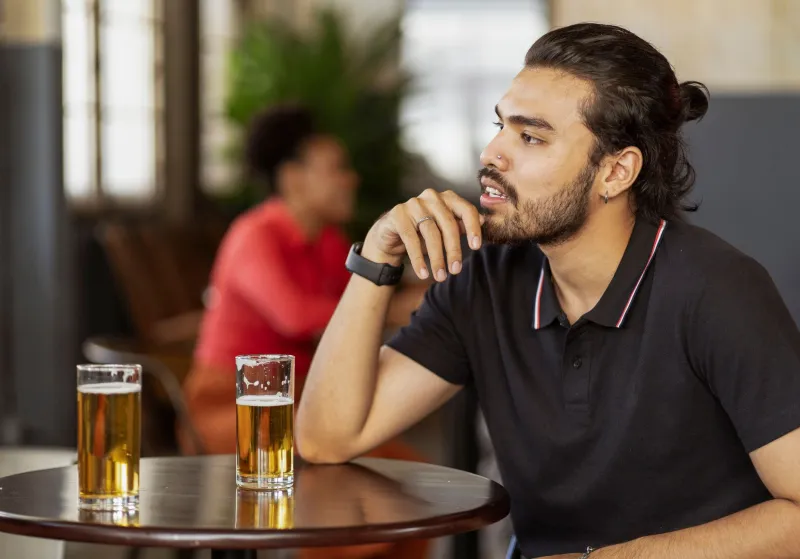
Somebody had to say it. Tuesday is underrated. Not in a contrarian, trying-to-be-different kind of way — genuinely, legitimately underrated. While the world obsesses over Friday-night plans and Saturday-morning brunches, the real magic at your neighborhood pub often happens on a random weeknight when the crowd is thin, the bartender has time to actually talk, and nobody's performing for anyone.
Ask any seasoned bartender what their favorite shift is, and a surprising number will tell you: weeknights. Specifically, the mid-week ones.
The Week Hits Hardest in the Middle
Monday gets all the bad press, but Tuesday and Wednesday are where the real grind lives. By Tuesday evening, the fresh optimism of a new week has already taken a few punches. The inbox is full. The commute was brutal. The meeting that should've been an email actually happened and lasted forty-five minutes. You're not burned out — not yet — but you can feel the friction building.
This is precisely when a mid-week pub visit earns its keep.
There's a psychological concept called "mental distance" — the idea that physically removing yourself from a stressful environment helps your brain disengage and reset. You don't need a weekend trip to the mountains to achieve it. Sometimes a ten-minute drive to your local and a seat at the bar does the job just as effectively. The shift in environment, the ambient noise of a room that isn't your living room, the ritual of ordering something cold — all of it signals to your nervous system that the workday is genuinely over.
No streaming queue can do that. Scrolling doesn't do that. Sitting on the couch "unwinding" while your phone buzzes with Slack notifications absolutely does not do that.
What Bartenders Notice About Their Tuesday Crowd
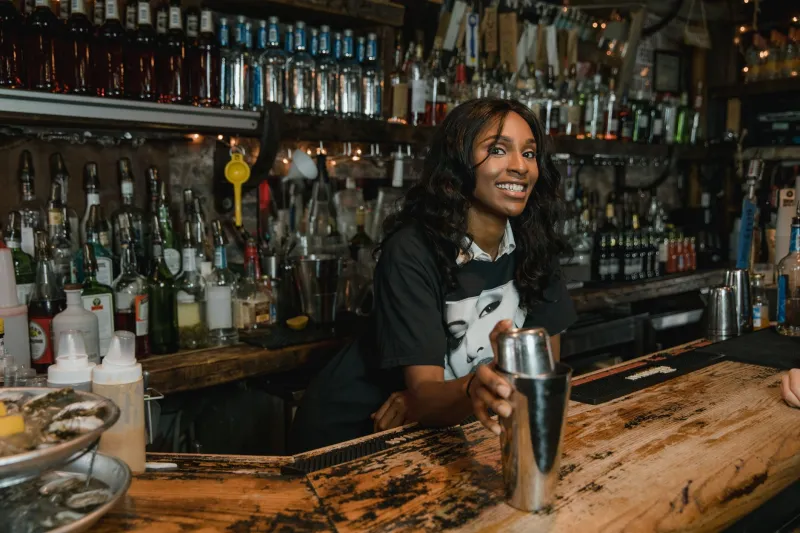
The weeknight regulars are a different breed. Any bartender worth their pour spout will tell you the same thing: Tuesday and Wednesday guests tend to walk in carrying more weight, and they leave lighter.
They're not there to be seen. They're not there to document the experience. They sit down, they order something familiar, and they exhale. Sometimes they want to talk — about the day, about whatever's been rattling around in their head since noon. Sometimes they just want to sit in a room full of low-level human noise and be left mostly alone with their thoughts and their beer. Both are completely valid, and a good bartender knows the difference within about thirty seconds.
The weeknight bar also tends to attract people who actually know the menu. Not the weekend visitors who need five minutes to decode the draft list — the Tuesday crowd knows what they want, they know how they like it, and they're often open to a recommendation if the bartender mentions something new came in. That back-and-forth is one of the small pleasures of mid-week pub culture that rarely gets written about.
The Case Against the Couch
Let's be honest about what the alternative looks like. You get home, you change into something comfortable, you open a delivery app, you scroll for eleven minutes before ordering something you've ordered a hundred times. You put on a show you've been "meaning to watch" and spend the first twenty minutes on your phone anyway. By nine o'clock you're half-asleep and mildly dissatisfied with how the evening went.
That's not rest. That's just a different kind of sedentary.
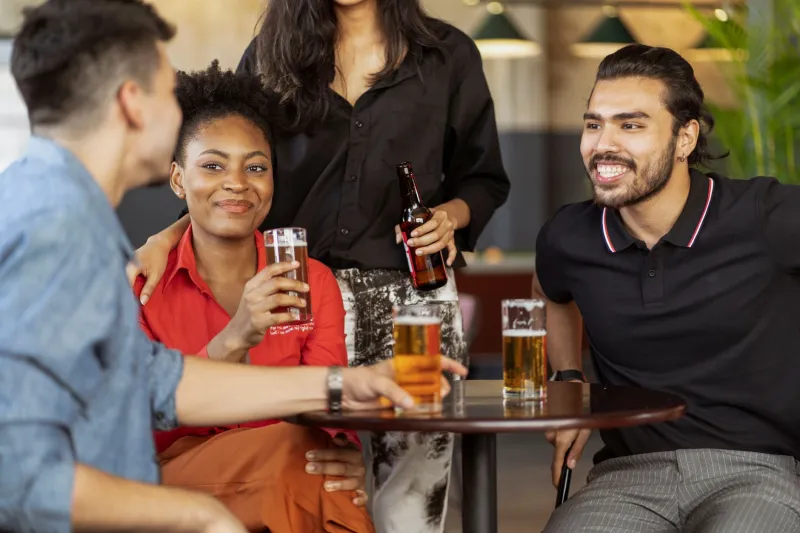
The pub offers something the couch genuinely cannot: friction-free social contact. Not a dinner party you have to prepare for. Not a networking event you have to dress up for. Just a room where other humans are present, conversation is possible but never mandatory, and the bar in front of you holds something cold and well-made.
Studies on loneliness and social connection consistently point to the importance of what researchers call "weak ties" — the casual, low-stakes interactions with acquaintances, neighbors, and familiar strangers. The bartender who remembers your usual. The guy two stools down who always has an opinion about the game. The couple in the corner booth who nod hello because they've seen you here before. These interactions are more nourishing than they seem, and they're exactly the kind that disappear when you spend every evening on the couch.
The Quiet Pleasure of a Room That Isn't Trying Too Hard
One of the things that makes mid-week pub visits particularly restorative is the atmosphere. On a Tuesday, your local isn't performing. The kitchen isn't slammed. The music is at a volume where you can actually hear it without it overwhelming conversation. The lighting feels right. Nobody's waiting for your table.
You get the place at its most natural — the version that exists when nobody's trying to impress anyone. And there's something deeply comfortable about that. It's the pub equivalent of a friend's kitchen rather than their dining room. Less formal, more real.
Ordering a pint and a plate of something good on a Tuesday night isn't indulgence. It's maintenance. It's the small, deliberate act of stepping outside the momentum of a hard week and reminding yourself that you're a person who exists outside of your responsibilities.
Make It a Ritual
The people who swear by their mid-week pub visit aren't doing it randomly. They've made it a ritual — same night, same general time, same barstool if they can get it. That consistency is part of what makes it work. The brain responds to ritual. It creates a reliable moment of transition in the week, a clear line between "still grinding" and "actually off."
You don't need to stay long. An hour and a half is plenty. One or two pints, something to eat, a conversation or a good book and some background noise. That's it. That's the whole prescription.
Tuesday will still be Tuesday when you walk back out. But you'll feel like a different version of yourself than the one who walked in — and that's worth more than anything queued up in your watch list.