Don't Rush the Last Round: How to End a Great Night at the Bar the Right Way
Don't Rush the Last Round: How to End a Great Night at the Bar the Right Way
There's a lot of energy poured into the opening act of a night out. The first beer, the first round of shots, the first pitcher that lands on the table and signals that the evening is officially underway. People agonize over that stuff. They study menus, ask questions, weigh options. And that's great — it matters.
But here's what most people never stop to think about: the last drink of the night is the one that travels home with you.
It's the flavor still sitting on your tongue when you lock the front door. It's the warmth you carry into the cab. It's what you're thinking about when someone texts the next morning asking how the night was. The nightcap — that deliberate, unhurried final drink — deserves every bit as much consideration as whatever you kicked things off with. Maybe more.
What a Nightcap Actually Is (And Isn't)
Let's clear something up. A nightcap isn't just whatever's left in your glass when the bartender announces last call. That's a remnant. A nightcap is a choice — a specific, intentional drink selected because it suits the end of an evening rather than the beginning of one.
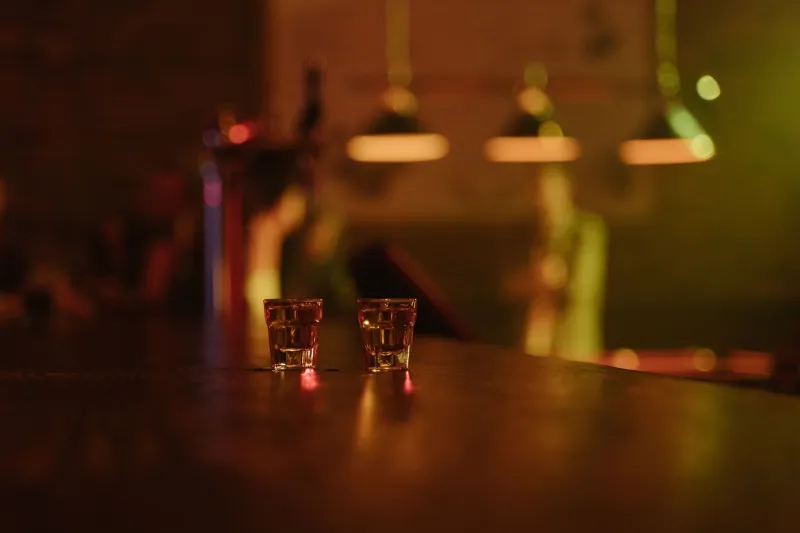
Traditionally, nightcaps leaned on spirits: a pour of whiskey, a glass of port, a small measure of brandy, a bitter amaro sipped slowly over conversation that's winding down. The logic was practical as much as pleasurable. These drinks are typically lower in volume, higher in complexity, and designed to be savored rather than consumed. They give you something to do with your hands while the night finds its natural conclusion.
The American version of this tradition got a little lost somewhere in the age of the open bar and the bottomless pitcher. But it's coming back — and the bars doing it right are the ones worth sticking around for.
Why the Last Drink Hits Different
There's actual psychology behind why the final moments of an experience tend to define how we remember the whole thing. Researchers call it the peak-end rule: people judge experiences largely based on how they felt at their most intense point and how they felt at the end. Everything in the middle? It kind of blurs together.
What that means for a night at the pub is this — you can have a genuinely great time across four solid hours, but if you close it out with a rushed, forgettable drink while the staff starts stacking chairs, the whole evening takes on a slightly deflated quality in memory. Flip it around: end the night with something deliberate and well-chosen, something that gives the evening a sense of completion, and the whole thing feels more satisfying in retrospect.
A good nightcap doesn't just taste good. It tells your brain the story is over, and it was worth reading.
What to Actually Order
The honest answer is that the best nightcap is whatever makes sense for you at the end of that particular night. But there are some reliable directions worth knowing.
Whiskey, straight or on the rocks. This is the classic for a reason. A good bourbon or rye — something with a little sweetness, a little spice, enough body to feel substantial — is almost always a strong finish. It's slow-sipping by nature, which means you're not rushing out the door. If you've been drinking beer all night, the contrast alone makes it feel like a different gear.
Amaro or digestif. These are criminally underutilized in American bar culture. An amaro is a bitter Italian herbal liqueur — Averna, Montenegro, Fernet-Branca — and there are now plenty of domestic craft versions worth exploring. They're meant to be drunk after eating, after drinking, as a kind of palate reset. A small glass of amaro is the bartender's handshake at the end of the night.
A simple, well-made cocktail. Not a complicated twelve-ingredient situation — something clean and classic. A Manhattan. A Negroni. A Last Word if your bar can make one well. These drinks have structure and intention built in. They don't ask anything of you except to pay attention.
A half-pour of something interesting. A lot of good pubs will let you do a smaller pour of a higher-gravity beer — a barleywine, an imperial stout, a strong Belgian ale — as a way of finishing the night on something rich without adding another full pint to the equation. Ask. The answer is usually yes.
Your Bartender Wants to Help
If you're not sure what to order, just say so. Tell your bartender what you've been drinking, how you're feeling, whether you want something sweet or dry or bitter, whether you want to keep it low-key or go out with a little flourish. A good bartender — the kind working a shift they actually care about — will light up at that question.
This is one of those moments where the relationship between a guest and a bartender becomes something more than a transaction. You're essentially handing someone a small creative brief: help me end this night right. That's a genuinely fun challenge to work with.
At a place like Eagle Rock, the people behind the bar know what's in their well, what pairs with what, and which bottles are sitting there waiting for exactly this kind of moment. Don't be shy about it.
The Ritual of Slowing Down
Part of what makes the nightcap worth reclaiming is what it does to the pace of the evening. The last drink is permission to stop ordering, stop scanning the room, stop thinking about what comes next. It's the moment the night becomes a conversation instead of an event.
Some of the best conversations that happen at a pub happen in the last twenty minutes of the night, over the last drink, when the energy has settled and nobody's performing anymore. The music feels quieter. The room feels smaller. The people across the table from you come into focus in a way they didn't an hour ago.
That's not an accident. That's what a good nightcap creates.
The Punctuation Mark You Didn't Know You Needed
Think of it this way: a night out is a story. It has an opening — that first drink, that first bite, the moment you settle in and realize tonight is going to be good. It has a middle, the long easy stretch of rounds and laughs and whatever happens when good people get comfortable together. And it has an ending.
Most people let the ending just happen to them. Last call catches them off guard, they grab whatever's closest, and they drift out the door without ever really closing the chapter.
The people who end the night with intention — who choose their last drink the way they'd choose the last line of a letter — those are the people who walk out of here feeling like the evening was complete.
You've got the whole night to get to that final round. Don't waste it when you get there.