The Invisible Crew Behind Every Perfect Pint
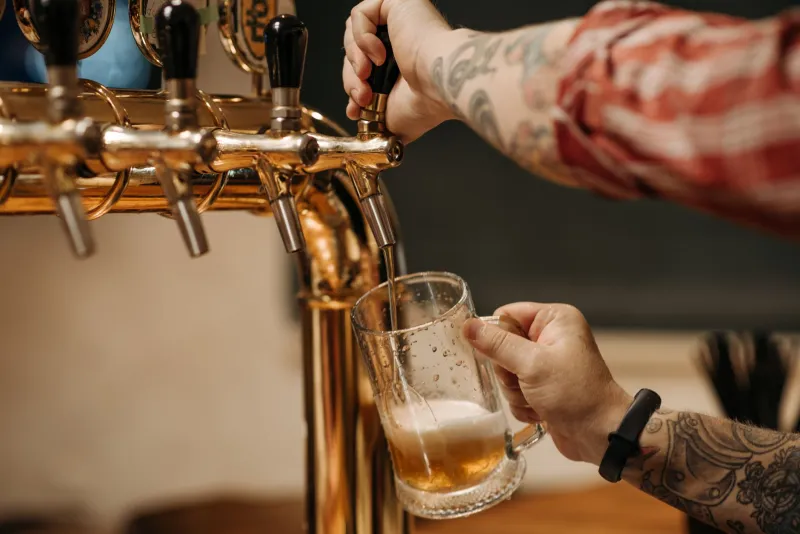
You slide onto a stool, catch the bartender's eye, and nod toward the tap. Thirty seconds later, a perfectly poured pint lands in front of you — golden, cold, and topped with just the right amount of foam. Simple, right?
Not even close.
What looks effortless from the other side of the bar is actually the result of a surprisingly deep chain of human effort. Distributors, line technicians, cellar managers, and logistics coordinators all play a role that most drinkers never stop to consider. Pull back the curtain a little, and that 'simple' glass of beer starts to look like a minor miracle.
The First Link: Your Beer Distributor Rep
Long before a keg ever rolls into a pub's walk-in cooler, a beer distributor rep has already been there — probably more than once. These are the folks who work the territory between the brewery and the bar, and their job is equal parts salesperson, logistics coordinator, and quality-control officer.
A good rep knows every account on their route the way a regular knows their favorite stool. They track which beers are moving, flag anything that's been sitting too long, and make sure that when a new seasonal release drops, the right bars get it at the right time. They're also the ones fielding 7 a.m. phone calls when a keg kicks unexpectedly on a busy Friday night.
"People think we just drive a truck and drop stuff off," one mid-Atlantic distributor rep put it bluntly. "But half the job is making sure the product is treated right from the moment it leaves the brewery to the moment it hits the glass."
That means monitoring temperature during transport, rotating stock so older kegs get tapped first, and occasionally talking a bar owner down from ordering a beer that won't move fast enough to stay fresh. It's relationship work, and it matters enormously to what ends up in your glass.
The Keg Room: Where Pressure Meets Precision
Once a keg arrives at a pub, it enters the domain of whoever manages the cellar or keg room — a role that's more technical than most people realize. Getting draft beer from container to tap requires a carefully balanced gas system, and even small deviations can ruin a pour.
Most draft systems use a blend of CO2 and nitrogen to push beer through the lines. The exact ratio depends on the beer style, the length of the lines running from the cooler to the taps, and even the elevation of the building. Get the pressure wrong, and you're either fighting foam all night or pouring flat, lifeless pints that don't do the brewer's work any justice.
Cellar managers — whether that's a dedicated staff member or a head bartender who drew the short straw — are responsible for knowing their system intimately. They check pressures, monitor temperatures (most draft beer wants to travel and pour somewhere between 36 and 38 degrees Fahrenheit), and troubleshoot the weird stuff: a line that's suddenly pouring cloudy, a coupler that's not seating right, a keg that sounds like it has more in it than it actually does.
It's unglamorous, often cold, and almost entirely invisible to the person sitting at the bar. But it's the difference between a pub with a reputation for great draft beer and one that quietly disappoints.
The Line Cleaners: The Most Important People You've Never Heard Of
If there's one group in the entire draft beer ecosystem that deserves more appreciation, it's line-cleaning technicians. These specialists — sometimes independent contractors, sometimes employed by a distributor — show up every couple of weeks to run cleaning solution through the beer lines that run from the keg room to the taps.
Why does this matter? Because beer lines are warm enough at the tap end to grow yeast, bacteria, and mold if left unchecked. The Brewers Association recommends cleaning lines at least every two weeks, and some high-volume bars do it weekly. Skip this step, and you'll start tasting it — a stale, funky, almost buttery off-flavor that has nothing to do with how the beer was brewed.
A thorough line cleaning takes time and care. The technician flushes each line with a caustic cleaning solution, lets it soak, rinses it completely, and then checks the clarity and taste of the first pour before declaring it ready. It's detail-oriented work that requires both technical knowledge and a decent palate.
"Most people have no idea why their beer tastes better at certain bars," said one line tech who works accounts across a mid-size American city. "A lot of the time, it comes down to whether those lines are getting cleaned properly and on schedule."
The Bartender: The Last Mile
All of that infrastructure, all of those professionals — they all hand off to the person standing behind the bar. And even at this final stage, there's craft involved that goes beyond just pulling a handle.
A well-trained bartender knows the right angle to hold a glass at the start of a pour, when to straighten it up, and how to finish with a proper head. They know which beers need a slow, patient pour and which ones are more forgiving. They can taste a pint and recognize when something's off — a sign that something upstream in the system needs attention.
The bartender is the quality checkpoint that the whole system flows toward, and a good one takes that seriously.
Raise a Glass to the Whole Chain
Next time you're at Eagle Rock Public House — or any bar worth its salt — and a pint lands in front of you looking exactly the way it should, take a second before you drink it. Think about the rep who made sure that keg arrived cold and on time. The technician who cleaned the lines two days ago. The cellar manager who dialed in the gas pressure that morning. The bartender who pulled it just right.
Good draft beer isn't just poured. It's earned — by a whole crew of people who never get a toast raised in their direction.
Maybe it's time to change that.