Stacked, Sauced, and Seriously Underrated: The Case for the Great American Pub Sandwich
Every few years, some new lunch concept sweeps through American cities promising to reinvent the midday meal. Poke bowls. Cauliflower wraps. That one place with the $18 pressed sandwich that arrives in wax paper and tastes like ambition without follow-through. And yet, tucked inside your favorite neighborhood pub, a genuinely great sandwich has been waiting patiently — stacked high, sauced properly, and served next to something cold and draft-poured.
The pub sandwich doesn't need a rebrand. It needs a little more respect.
What Sets a Great Pub Sandwich Apart
Let's be honest: not every sandwich served at a bar clears the bar. A bad pub sandwich is a sad thing — limp lettuce, mystery deli meat, a smear of something yellow from a squeeze bottle. But a great pub sandwich? That's a different animal entirely.
The difference usually starts before a single ingredient hits the cutting board. It starts with intention. A kitchen that takes its sandwich program seriously thinks about the whole experience — how it's going to eat, how it's going to hold together, and whether the person eating it is going to be thinking about it two days later.
The best pub sandwiches have a clear identity. A proper Reuben isn't trying to be anything other than a Reuben: corned beef that's been sliced thick and piled generously, Swiss that melts rather than just sits there, sauerkraut with enough tang to cut through the richness, Russian dressing with a little heat, all of it pressed between rye bread that develops a crust without losing its chew. Every element has a job. Nothing is decorative.
Same goes for a well-built turkey club. The turkey has to be real — roasted, not processed — layered with bacon that still has some snap to it, ripe tomato, crisp lettuce, and mayo that pulls the whole thing together without overwhelming it. Three layers of toasted bread, cut on the diagonal, and served with something on the side worth eating. That's it. That's the whole formula. Except execution is everything, and execution is where most places fall apart.
Bread Is Not an Afterthought
If there's one place where pub sandwiches most commonly go wrong, it's the bread. Soft, flavorless white sandwich bread might work for a childhood PB&J, but it has no business supporting two inches of corned beef and Swiss. It collapses. It absorbs moisture and turns to paste. It disappears into the filling instead of working with it.
Great pub sandwiches are built on bread with structure and flavor. Rye for a Reuben — obviously. A sturdy sourdough or ciabatta for something loaded with roasted vegetables and aioli. A brioche bun for a chicken sandwich that needs a little richness to match the filling. Thick-cut Pullman for a club, toasted enough to hold its shape through three layers.
The bread isn't just a delivery mechanism. It's a flavor contributor. When the right bread meets the right filling, the whole sandwich becomes more than the sum of its parts. When the bread is wrong, no amount of great filling can save it.
The Condiment Question
House-made condiments are one of the clearest signals that a kitchen actually cares about its sandwich program. Not because store-bought is always bad — a good mayo is a good mayo — but because a kitchen that takes the time to make its own Thousand Island, its own honey mustard, or its own herb aioli is a kitchen that's thinking about differentiation.
A house-made Russian dressing built with real horseradish, a little Worcestershire, and something pickled for brightness does something that the stuff from a bottle simply can't replicate. It makes the sandwich taste like this place, not like any place.
Condiments also solve the balance problem. Fat needs acid. Salt needs something sweet. Heat needs something cool. When the condiment is calibrated to the specific sandwich it's going on — rather than just slapped on as an afterthought — the whole thing comes into focus. That's the difference between a sandwich you eat and a sandwich you remember.
The Layering Logic
There's a reason experienced sandwich makers think carefully about ingredient order. Wet ingredients — tomatoes, pickles, anything with moisture — should be positioned so they don't immediately soak into the bread. Proteins go where they'll be bitten through cleanly. Greens act as a barrier when they need to, and a textural contrast the rest of the time.
None of this is complicated, but it requires someone in the kitchen to actually think about it. And when a pub kitchen does think about it, you can feel the difference in every bite. The sandwich holds together. The flavors hit in the right sequence. Nothing slides out the back onto the plate before you're ready for it.
A sandwich that eats well from the first bite to the last is a small engineering achievement. It shouldn't be, but given how many sandwiches fail at this basic task, it kind of is.
Why the Pint Makes It Better
Here's the thing about eating a great pub sandwich at a bar versus eating it anywhere else: the context matters. Sitting at a table at Eagle Rock Public House with a cold pint of something malty or crisp in front of you changes the experience in ways that are hard to fully explain but easy to feel.
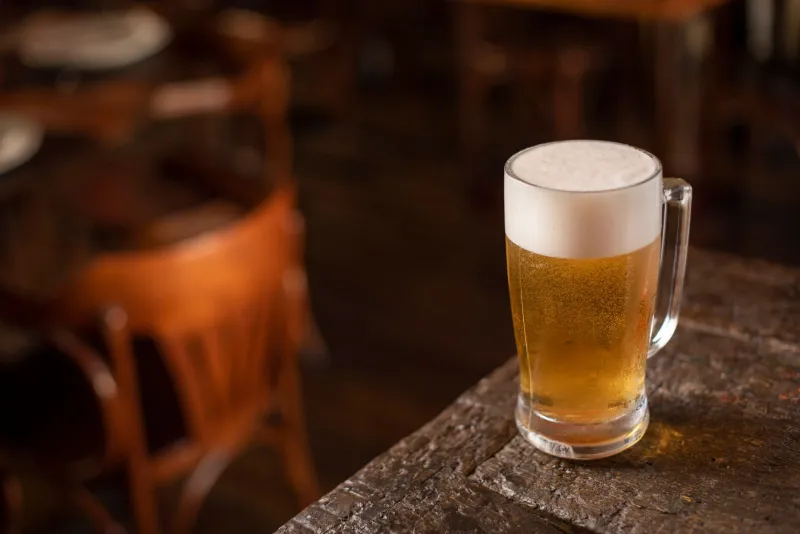
Beer and sandwiches have always made sense together. The carbonation cuts through fat and richness. A hoppy IPA plays off the salt in cured meat. A cold lager refreshes the palate between bites of something smoky or spiced. A brown ale brings out the earthiness in roasted turkey or a good sharp cheddar. The pairing isn't complicated — it's intuitive. It's the kind of thing that becomes a habit because it works.
But beyond the flavor logic, there's something about the ritual of it. Sitting down at a pub in the middle of the day, ordering something built and real, and taking an actual break from whatever the morning was — that's a lunch worth having. Not a sad desk salad. Not something assembled in a fast-casual line. A sandwich with craft behind it and a pint that was poured properly, at a place where the bartender knows your name or at least nods like they might.
Protect the Pub Sandwich
American lunch culture is under constant pressure to be faster, lighter, and more photogenic. There's nothing wrong with any of that — but there's also something worth protecting in the idea of a slow, satisfying midday meal built around something genuinely good.
The pub sandwich, done right, is one of the most complete eating experiences available at noon on a Tuesday. It's filling without being heavy, familiar without being boring, and endlessly variable without losing its soul. From a proper Reuben dripping with dressing to a turkey club stacked three decks high to a roast beef number with horseradish and caramelized onions on thick sourdough — the range is enormous, and the ceiling is high.
All it takes is a kitchen that gives a damn and a bar that pours a proper pint. That combination, when you find it, is worth coming back for.