One Pitcher, One Table, One Night: The Beautiful Democracy of Sharing a Round
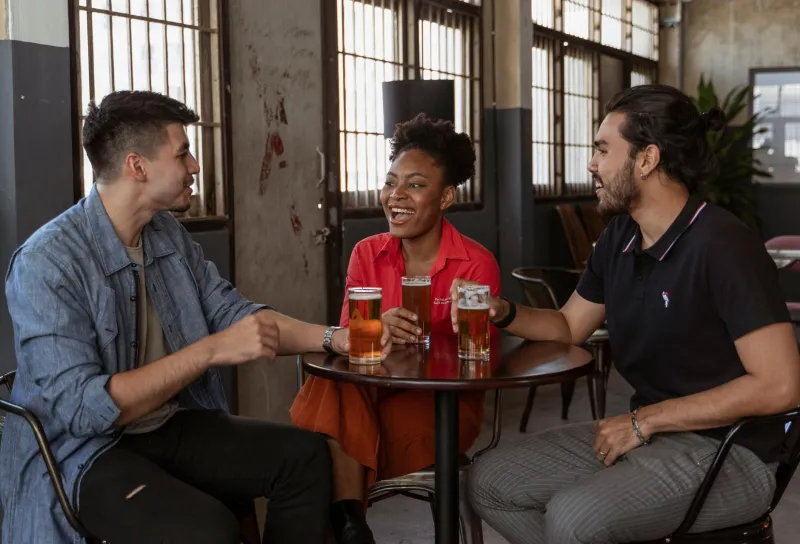
Picture this: it's a Thursday night, the bar is warming up, and someone at your table catches the server's eye and says, "Can we get a pitcher of that amber?" In that single moment, something shifts. The evening stops being a collection of individual drink orders and becomes something else entirely — a shared commitment, a little social pact sealed with foam and cold glass.
The pitcher of beer is one of those things that seems almost too simple to write about. It's just a big jug, right? But spend enough time behind or in front of a bar and you start to realize that the pitcher carries more meaning than its size suggests. It's one of the most honest, unpretentious rituals left in American social life, and right now — quietly, without much fanfare — it's having a moment.
Where the Pitcher Comes From
The communal drinking vessel is older than the United States itself. Long before craft lager and IPAs, people gathered around shared jugs of ale in colonial taverns, filling their cups from a common source as a matter of practicality and, more importantly, trust. You didn't share your drink with someone you were wary of. The act of pouring from the same container was a gesture of good faith.
That tradition carried forward through American bar culture in ways that are easy to overlook. The pitcher became a fixture at bowling alleys, sports bars, and neighborhood pubs across the country through the mid-20th century — a working-class staple that said, we're not here to be fancy, we're here to be together. It was the drink of Little League celebrations, Friday afternoon wind-downs, and backyard cookouts that spilled into the garage.
There was never anything aspirational about it. That was entirely the point.
What a Pitcher Actually Says
When you order a pitcher, you're making a statement that goes beyond thirst. You're saying: I'm not going anywhere for a while. You're committing to the table, to the people around it, to the night itself. A pitcher implies duration. It assumes refills. It takes for granted that the conversation is going to keep going long enough to justify the volume.
There's real psychology at work here. Research on shared food and drink consistently shows that eating and drinking from communal sources increases feelings of connection and cooperation among groups. When everyone pours from the same pitcher, there's an implicit equality to it — nobody's nursing a craft cocktail while someone else is stuck with water. You're all drinking the same thing, at the same pace, from the same source. That levels the table in a way that's hard to manufacture any other way.
Compare it to the hyper-individual ordering culture that's crept into bar-going over the past decade. Everyone staring at a laminated menu of thirty specialty cocktails, agonizing over their personal selection, the server circling back three times before everyone's finally ready. It's fine. It's even fun sometimes. But it fragments the group from the jump. The pitcher, by contrast, collapses all of that deliberation into one decision made together. You agree on a beer, you commit, you pour.
The Quiet Comeback
Here's what's interesting: younger bar-goers — the same demographic that drove the hyper-craft, hyper-individual cocktail and beer boom — are rediscovering the pitcher. Not out of nostalgia necessarily, but out of something that might be called social fatigue.
After years of curated experiences, personalized menus, and the subtle pressure to perform your taste through your drink order, there's a growing appetite for something less precious. The pitcher is a small act of rebellion against the idea that your bar night needs to be a showcase. It says: I'm here for the people, not the performance.
You see it at good neighborhood pubs — places where the tap list is solid but not overwhelming, where the lighting is warm and the booths are worn in just right. Tables of friends in their twenties and thirties who could easily order individual pints are instead splitting a pitcher of something sessionable and spending the money they saved on another round of mozzarella sticks. Smart, honestly.
How to Do It Right
If you haven't ordered a pitcher in a while, here's a gentle reminder of the etiquette that makes it work.
Pick something crowd-friendly. A pitcher isn't the moment to introduce your friends to an aggressively hopped triple IPA. Go for something approachable — a clean lager, a light ale, an amber that plays well with whatever's on the menu. The point is consensus, not conversion.
Keep an eye on the pours. The unspoken rule of the pitcher is that you keep your neighbors' glasses topped off before you refill your own. It's a small thing, but it matters. The person who consistently pours for others first is the person everyone wants to share a pitcher with.
Order it early. A pitcher ordered in the first round sets the tone for the whole night. It signals openness, generosity, and a willingness to settle in. A pitcher ordered after everyone's already two drinks deep is great too, but it doesn't carry the same opening-statement energy.
Don't overthink it. Seriously. The pitcher's whole appeal is that it's uncomplicated. Trust it.
Why Every Great Pub Night Deserves One
At Eagle Rock Public House, we believe a good night out is built on simple things done well — cold beer, honest food, and the kind of company that makes you forget to check your phone. The pitcher fits that ethos perfectly. It's not a trend. It's not a gimmick. It's just a really good way to make sure everyone at the table feels included in the same moment.
There's a reason the image of friends gathered around a table with a pitcher in the center feels so universally warm. It's because it is warm. It's hospitality stripped down to its core: I've got enough here for all of us, and I want you to have some.
So next time you're settling in for the night — whether it's a playoff game, a long-overdue catch-up with old friends, or just a Tuesday that needed to become a Thursday — skip the individual orders for a round and ask for a pitcher instead. Pour for the person next to you first. Watch the table relax.
That right there? That's the whole point.