The Handshake Deal That Built American Bar Culture: A Love Letter to the Open Tab
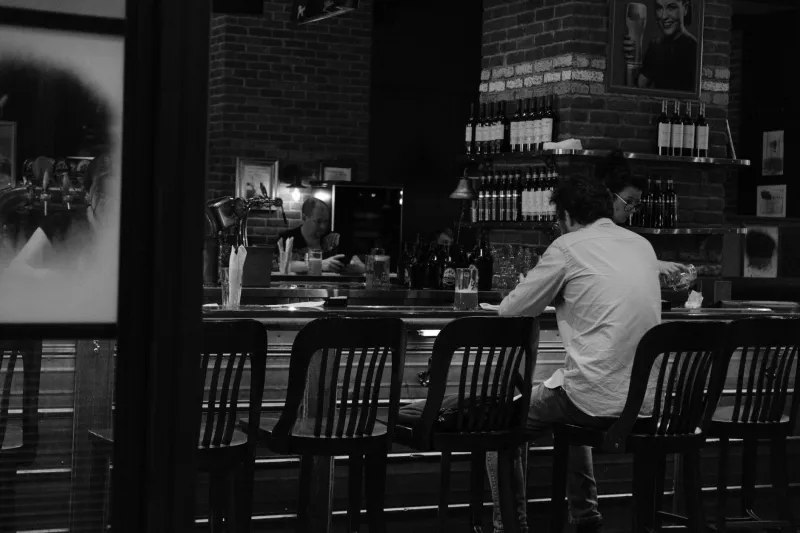
Somewhere between your second pint and the moment you decide to stay for one more, a quiet agreement gets made. The bartender doesn't ask for your card again. You don't wave one down to settle up mid-conversation. You're running a tab — and both of you know you're good for it.
It's a small thing. Barely worth mentioning, really. Except that it kind of isn't small at all.
The open bar tab is one of the last genuine acts of mutual trust woven into everyday American life. No contract. No collateral. No algorithm calculating your risk profile. Just a person behind the bar deciding you're worth extending a little faith to, and you deciding not to walk out the door before honoring it. That's it. That's the whole deal.
And it's quietly disappearing.
What a Tab Actually Is (And What It Isn't)
Let's be honest: in pure transactional terms, a bar tab is a mild financial risk for the establishment. You're essentially being extended a small, informal line of credit based on nothing more than your face, your vibe, and — if you're a regular — your history in that room. No terms and conditions. No late fees. No fine print.
What it isn't is naive. Any bartender worth their pour knows how to read a room. They know who's going to close out cleanly and who's going to ghost when the bill hits thirty bucks. The tab isn't blind trust — it's earned trust. Or at least, trust that's being tested in real time, with every round that gets added to the slip.
That distinction matters. Because the tab isn't just a convenience. It's a small ongoing referendum on your character.
The Cultural Roots Go Deep
Run a tab at enough neighborhood bars across this country and you start to notice something: the places that still do it freely tend to be the ones with the strongest sense of community. The corner spots where the bartender knows your usual. The pubs where the same group of regulars has been anchoring the same stretch of stools for years. The rooms where people actually talk to each other.
That's not a coincidence.
The tab system has roots stretching back to colonial American taverns — establishments that functioned as post offices, courthouses, political meeting halls, and community centers all at once. Back then, credit between a tavern keeper and their patrons wasn't unusual. It was woven into the fabric of how local economies worked. You paid when you could, the keeper trusted you would, and the whole thing ran on reputation rather than receipts.
That social architecture didn't vanish when credit cards arrived. It just got quieter. The bars that kept it alive — the ones still writing names on paper tabs and tucking them under the register — are maintaining something that predates the entire modern financial system. Whether they know it or not.
Why Tap-to-Pay Isn't the Same Thing
Here's where someone will inevitably say: What's the big deal? I can pay instantly with my phone. Isn't that easier for everyone?
Technically, yes. But that's kind of the point.
When every round gets settled the moment it's poured, something subtle shifts in the experience. The transaction becomes the event. The payment becomes a constant interruption — a small but persistent reminder that you're a customer in a commercial space, not a neighbor at a communal table. It keeps the relationship between you and the bar in strictly economic terms.
An open tab, by contrast, pushes that friction to the edges of the evening. You arrive, you drink, you talk, you laugh. The business part waits. And in that waiting — in that suspension of the transactional — something more like genuine hospitality takes root.
There's a reason the best nights at a neighborhood pub rarely feel like spending money, even when you spend plenty of it.
The Unspoken Code
If you've ever run a tab at a place you love, you already know there's an etiquette to it that nobody ever states out loud.
You don't let it run too long without checking in. You don't add a round for strangers on someone else's tab without asking. You don't disappear to the bathroom and slip out the side door. And when you close out, you tip like the tab was a favor — because it kind of was.
This unspoken code is the social contract of the neighborhood bar, compressed into a single slip of paper. Breaking it doesn't just mean you stiffed the house. It means you violated something closer to a community agreement. Word travels. Rooms get smaller. That's how it works.
The bartenders and owners who still run tabs understand all of this implicitly. They're not just tracking drinks — they're managing relationships. Curating a room. Deciding who gets extended the benefit of the doubt and who's already used theirs up.
What It Says About Your Local
Not every bar runs tabs, and that's fine. High-volume spots, concert venues, stadium concessions — the math doesn't work, and nobody's expecting it to. But when your neighborhood pub still does it, that's information.
It means they've made a deliberate choice to prioritize the experience of being there over the efficiency of processing you through it. It means they trust their regulars enough to float them a few rounds while the conversation gets good. It means they've built — or are actively building — the kind of community where that trust gets repaid, night after night.
That's not a small thing to offer. In an era when most businesses are optimizing every possible friction point out of the customer experience, choosing to extend informal credit to the people in your bar is a quiet act of faith in your community.
Keep the Tab Open
There's something worth protecting in the ritual of the open tab. Not because it's nostalgic or quaint, but because it represents a mode of human interaction that's increasingly rare: two parties agreeing to trust each other, without documentation, based on nothing more complicated than shared presence in a room.
Next time you settle up at the end of a long evening — when you hand over your card and add that tip and sign your name — take a second to appreciate what just happened. You and the bar made a deal. You both kept it. And somewhere in that small, ordinary exchange is a version of community that the modern world keeps trying to automate away.
Long may the tab run.